Friday, March 16, 2012

The Invisible Man

Cholera Victim, Artibonite--Photo by John Carroll (July, 2011)

"I am an invisible man. No, I am not a spook like those who haunted Edgar Allan Poe. Nor am I one of your Hollywood-movie ectoplasms. I am a man of substance, of flesh and bone, fiber and liquids--and I might even be said to possess a mind. I am invisible, understand, simply because people refuse to see me."

Ralph Ellison
"Invisible Man"

Good News from Cite Soleil!!


Manushka, Cite Soleil (Photo by John Carroll)

Well, finally some good news from Soleil. I think.


Manushka is a 24 year old young lady who I met in Soleil near the pediatric clinic. She told me about her life in Soleil and losing her father to cholera.

She seemed like one of thousands of people in Haiti's slum... filled with talent that willl never be brought to the surface or be used for productive purposes. With only four years of education, Manushka just seems so smart.

I spoke with a friend of mine who is CEO of a company in Port-au-Prince. We talked about Manushka. He asked me if Manushka could fill out an application form for possible employment in his company. I told him that I didn’t know.

So I related this conversation to Manushka and she cringed when I told her that she would need to fill out an application form if she wanted this job. She said she would give it a try.

So my driver and I dropped her off at the company the other day and Manushka did her best to fill out the application form. Even though she checked that she was an "homme", she got the job. 


Her first day was Monday of this week.

This seems like good news. Manushka will have a reason to get up in the morning and make herself look presentable. She will have to be disciplined to arrive at work sharply at 7 AM each morning. And if she does these things and performs at work, she will have a constant income for the first time in her life.  


And Manushka will be able to support her eight siblings in Soleil better than she can now.


I have learned that good intentions don't always lead to good results. I hope Manushka's new job doesn't back fire on her.

In her part of Soleil it will be well known that she has a job. I hope that she is not robbed. I hope she is not bribed for money. I hope her two hours of electricity per day is not disconnected. I hope her new job won't hurt her in any way.

And I have a bigger question.

What would happen if, instead of a 99% unemployment rate in Soleil (my figure), there was a 50% unemployment rate? What if every other Manushka in Soleil had a full time job that did not involve selling charcoal, mangoes, or carrots on the street corner?

What would that do for all of Soleil’s woes? Would Soleil's water be cleaner? Would infant mortality in the slum decrease?

During the last 10 years when we have asked people in Soleil what they want the most, they have uniformly replied "jobs". They didn't ask for more guns or bullets or violence or kidnappings, or MINUSTAH, or sick babies, or illiteracy. They asked for jobs.


Let us hope that this job is a good thing for Manushka.


John A. Carroll, MD
www.haitianhearts.org

Wednesday, March 14, 2012

Irish Immigrants Killed in the US

Last year in Haiti, dozens of Haitians were killed in southern Haiti because they were believed to be spreading cholera.

One-hundred and seventy-nine years ago in the United States Irish immigrants working on the railroad were mass murdered. The Irish were thought to be spreading cholera also.

See this amazing report.

Baseball in the time of Cholera


Thursday, March 08, 2012

Saint Catherine's Hospital, Cite Soleil--March 7, 2012

Street in Front of St. Catherine's

Outside Main Entrance to St. Catherine's
St. Catherine's Hospital, Cite Soleil
Three Stretcher Emergency Room, St. Catherine's Hospital

Dehydrated Twins With IV Fluids, St. Catherine's Hospital
Waiting to be Admitted, St. Catherine's Hospital
Neonatal Intensive Care Unit, St. Catherine's Hospital
Another Innocent, Pediatric Clinic Cite Soleil
Outside St. Catherine's Hospital, Cite Soleil

Tuesday, March 06, 2012

C'est la Vie in Cite Soleil

St. Catherine's Hospital, Cite Soleil--Photo by John Carroll
The following post is a description of two interviews I had today with young ladies that live in Cite Soleil in Port-au-Prince. My main questions for them revolved around cholera.

But first of all, I want to give a very brief summary of where I think the public water comes from in Soleil. These few sentences will be boring, but they are important. Water engineers and smart people out there, please help me if this is incorrect in any way, and I will correct my mistakes. More than ever in Soleil, access to good water can mean the difference between life and death.

The water that is pumped to Soleil is from a water reservoir in LaPlaine which comes from the water table (anba woch) and this water is pumped underground by pipes to the large imposing water tower sitting at the entrance to Soleil off of Route National 1.

Two white PVC pipes run along the northern side of the water tower. One carries water up and the other carries water down to pipes below the ground and through these pipes water is pumped to “basins” spread all over Soleil. A ‘basin” is a series of pipes and spigots that people have access to in the slum. People come to these basins and fill up white buckets of water, put them on their head, and walk back to their shack. It is up to them to treat their own water with Clorox or aquatabs because it is my understanding that the water from LaPlaine has not been treated. 

Another important supply of water to Soleil are water trucks that transport water in to the slum. I don’t know enough to say much about this water’s origin, its purity, or its potability. But these points would not be hard to answer.

The importance of this "chain of flow" of water is to figure out the best places to test and treat the water for cholera. 
-------------

This is Saturday, February 25, 2012, and there is no pediatric clinic today in Soleil. So my goal was to go the Boston neighborhood in Soleil to check out information regarding cholera.  I wanted to find out if the people in Boston have any means to fight the oncoming fourth wave of cholera when the rainy season starts again very soon in April.

I met Natalie the secretary who works in the pediatric clinic in the back of Soleil where I work during the week.  Natalie is a great gal and lives in Soleil at Soleil 19, just several blocks from the clinic. She and I were going to walk the mile through the slum to Boston but she had some news for me.

Natalie calmly informed me that there was “a war” going on in the streets between the gangs of Boston and Beleko. These are two large neighborhoods that abut each other in the northwest part of the slum. Natalie said that one of the  gang leaders in Beleko was shot and killed two days ago and things were still dangerous in the streets.

She advised me to stay in the back part of Soleil where we were and I could talk to her neighbors about cholera. That seemed like fine advice to me. 

So we walked through the little pathways of Soleil to Natalie’s mother’s one room shack and sat down inside the room.  It was very clean and not too hot. 

Natalie said in a hushed voice that we were sitting right next door to the Soleil gang chief’s shack. I asked her about him and she said he was benevolent to the people around this neighborhood and she referred to him as "Patwon". She also said the people in Soleil are not as mean as the warring people in Boston and Beleko. 

I told her I wanted the Soleil people’s perspective on cholera. I asked Natalie to talk to some people close by that had suffered from cholera or had family members suffer from cholera. She concurred and said “no problem”. Natalie said it would not be hard to find people very familiar with cholera. 

She stepped outside of her mother’s place and called out the name “Venise”. A few seconds later a young lady walked in carrying her three-month old baby and sat down in a white plastic lawn chair in front of me.

Venise--Photo by John Carroll, February 25, 2012

Venise did not know her own age but she states that when she was 19 years old her mother threw her out of the house in Jeremie and somehow she ended up in Soleil. (Jeremie is a city about 10 hours by public transportation from Port-au-Prince.)  She does not know how many years she has been in Soleil. She does not have an electoral card or an identity card, and her birth certificate is lost somewhere in Jeremie. Venise appeared to be about thirty years old. 

Venise told me that she had never been to school and does not know how to read and write. She has no job and depends on her neighborhood (lakou) in Soleil to support her. Her neighbors give her and her children some food when they have extra. Typical food for Venise and her children are rice, pureed beans, ground corn, and some meat sauce. If the neighbors have no extra food that day, Venise and her children don’t eat.

She lives in a one room shack near Natalie’s mother and her neighbors pay her 550 Haitian dollars (about 70 dollars US) rent each six months to her landlord. 

Venise has five children ages 14, 8, 4, 2 and the happy three-month old she was holding. The two oldest children are from one man and the three youngest from second man. She reports the same as most Haitian women in this social strata about her childrens’ fathers:  “Yo pa occupe nou...” which means that the men do nothing for her or her kids.

Venise, with the help of her lakou, had her two oldest children in schools in Soleil.  But their father took them with him moved them into a tent city in Fort National. However, the father’s girlfriend was beating the two kids so severely that a neighbor in another tent took them in and is letting them sleep and eat whatever she can find for them. Neither of the two kids are in school now. 

Venise no longer sees the older kids in Fort National and she has the three youngest children with her in Soleil.

Venise told me that one day in November, 2011 when she was 9 months pregnant with the baby she is holding today, she abruptly started having diarrhea and began to vomit.  And so did her eight year old daughter Mimi who still lived with her. They both went to St. Catherine’s Hospital Cholera Treatment Center (CTC), which is just a couple of blocks away, and was run by Doctors Without Borders-Belgium. 

Venise said she went into shock quickly and required 23 liters of IV fluid over several days. Mimi required only a couple of IV liters to feel better. They both survived because the CTC was so close and they went quickly. And the CTC was well stocked with supplies and had people who knew what they were doing. Venise delivered the three-month old baby girl a couple of weeks later. 

Doctor Without Borders-Belgium left St. Catherine’s in December and the hospital is now run by MSPP (Public Health Department of Haiti). When Doctors Without Borders was in charge of St. Catherine’s, there was no charge. But now it costs five Haitian dollars (about 75 cents) for a dossier to be made and for a consult with a doctor. If one is admitted to the hospital, MSPP charges one hundred Haitian dollars (12 US dollars) for the use of the bed no matter how long the patient’s stay is in the hospital. 

I asked Venise where she gets her water now. She gets her water from some public pipes here in the neighborhood (basin) which comes from the big water tower that sits in the entry way to Cite Soleil. One bucket of water costs one gourde (a few pennies). 

She said that she did not treat her water with Clorox or Aquatabs before she got cholera and she doesn’t treat the water now either because she has no money. So she and her kids are drinking this water which is not really clean. 

I asked Venise if she is afraid of cholera. She said she is afraid and that “it is coming back.” When I asked her how she knows cholera is coming back, she said “everyone says it is”. 

I asked Venise if she was happy with her life in Soleil. She said “Yes, because I have no other place to go.”

-------------
Manushka
The second person I talked to was a polite young lady named Manushka. She said she is 24 years old.

Manushka was born and raised in Soleil and lives in the same neighborhood near Soleil 19 near Natalie and Venise. She has no children but she is the oldest of seven and she feels responsible for her six younger brothers and sisters. 

Manushka told me that her mother died in 2000 and stated that her mom “was sick all the time”. Her father buried her mother in Drouillard Cemetery in the slum. This funeral and burial cost her father quite a bit so Manushka could not continue in school and she never went back to school. She has four years of education and can write her name and do simple math. 

She told me that 13 months ago her father died from cholera. When I asked her what year that would have been, she did not know.  

Manushka said that her father did manual labor on Kafou Aeropo (Airport Corner) and drank water while he was at work. He became sick on a Monday and was taken directly to Doctors Without Borders-Tabarre and died on Wednesday. They did not allow visitors in the cholera tent and so she was unable to see her father until after he died. He is buried in the Drouillard Cemetery too.

Manushka seems very bright. 

I asked her if she knows why Haiti has cholera. She said no and then turned the question around on me and asked me if I knew why.  

I told her that it was inadvertently introduced here by the MINUSTAH soldiers in central Haiti in 2010.

She just slightly smiled and said nothing.

I asked her if she ever heard this explanation and she said no. I asked her if MINUSTAH was doing a good job in Soleil and she said no. She said they are not doing much good work and that they abuse people by hitting innocent people in Soleil. I asked her if MINUSTAH still shoots in Soleil, and Manushka said no. 

When I asked her if the Haitian National Police (HNP) abuse people she said yes. She said they tear up ID cards and hit people in Soleil. However, she said that the HNP needs to be supported over MINUSTAH because the “Haitian police are us...they are from here.”

I asked Manushka if she went to church. She said no. When I asked her what religion she is, she said that she has no religion. I asked her if she was mambo (worship the devil) and she still replied no. She said that she doesn’t believe in God...that she is an atheist.  

I asked Manushka if she was happy with her life here in Soleil. She said no because of all the “gang fighting and people running”. 

When I asked Manushka where she gets her water, she said it is from the same pipes (basin) where Vanesse gets her water. But Manushka treats her water with Clorox. 

When I asked her what Soleil needs, she replied clean water, clean streets, and education for young people. She said that she would like to go to a professional school (I think she meant vocational) and that if she learned something and got a job that would be good for her and good for Haiti too. She would like to become a cosmetologist. 

I asked Manushka if she became sick where she would go for medical care. She stated that she has nowhere to go since MSPP took over St. Catherines and charge 25 gourdes for a dossier. And she said that she has no money for any medication that would be prescribed anyway. 

When I asked Manushka if the Haitian government was going to do anything to help Soleil, she said no. She said that the Haitian government doesn’t respect the young people of Soleil or think that they have any importance, so they are ignored.

She said the only help Soleil gets is from foreigners coming with trucks of water and Clorox. She viewed this as the only good thing being done for the people of Soleil.

------------

After talking with these two young ladies, Natalie and I left her mother’s room and walked back through Soleil towards the pediatric clinic. I stopped at a basin where women and children were collecting water coming from the pipes. I asked the women if they put Clorox in the water and they said yes and they asked me to buy them more Clorox.

---------

So here are my questions and comments about the water and cholera in Soleil:

Could the water be tested coming from LaPlaine to see if it is cholera free? Can it be tested as it comes out of the spigots at the local basins in Soleil just before it flows into the white buckets?

Can there be a constant supply of Clorox and aquatabs for the hundreds of thousands of people who live here?

Can thousands of liters of Ringer’s Lactate (and IV tubing and setups) be brought to St. Catherine’s NOW so it is ready in one month for the wave of cholera that is to hit.

Can nurses be hired by MSPP for St. Catherine’s CTC NOW so they are ready to begin work. And can cholera community health educators start circulating through Soleil NOW educating people about what is most likely coming back in a few weeks. 

Doctors Without Borders and other NGO’s did all they could and saved many lives in Soleil with their CTC. But they are gone from Soleil now and St. Catherine’s Hospital and the CTC are definitely not ready right now for a big hit of cholera patients.  

It is time for other agencies to kick in. The Haitian Prime Minister just resigned the other day and there is much political fighting high up in the Haitian government. This instability could easily disrupt the flow of cholera materials that is needed to save lives in Soleil. 

The two girls I interviewed are typical of the people of Soleil. They help each other as much as possible under almost impossible circumstances.  They want to live as much as we do. We have 16 months of experience with cholera now in Haiti and need to learn from our mistakes. Stopping cholera deaths in Soleil is completely possible. We just have to have the will. 

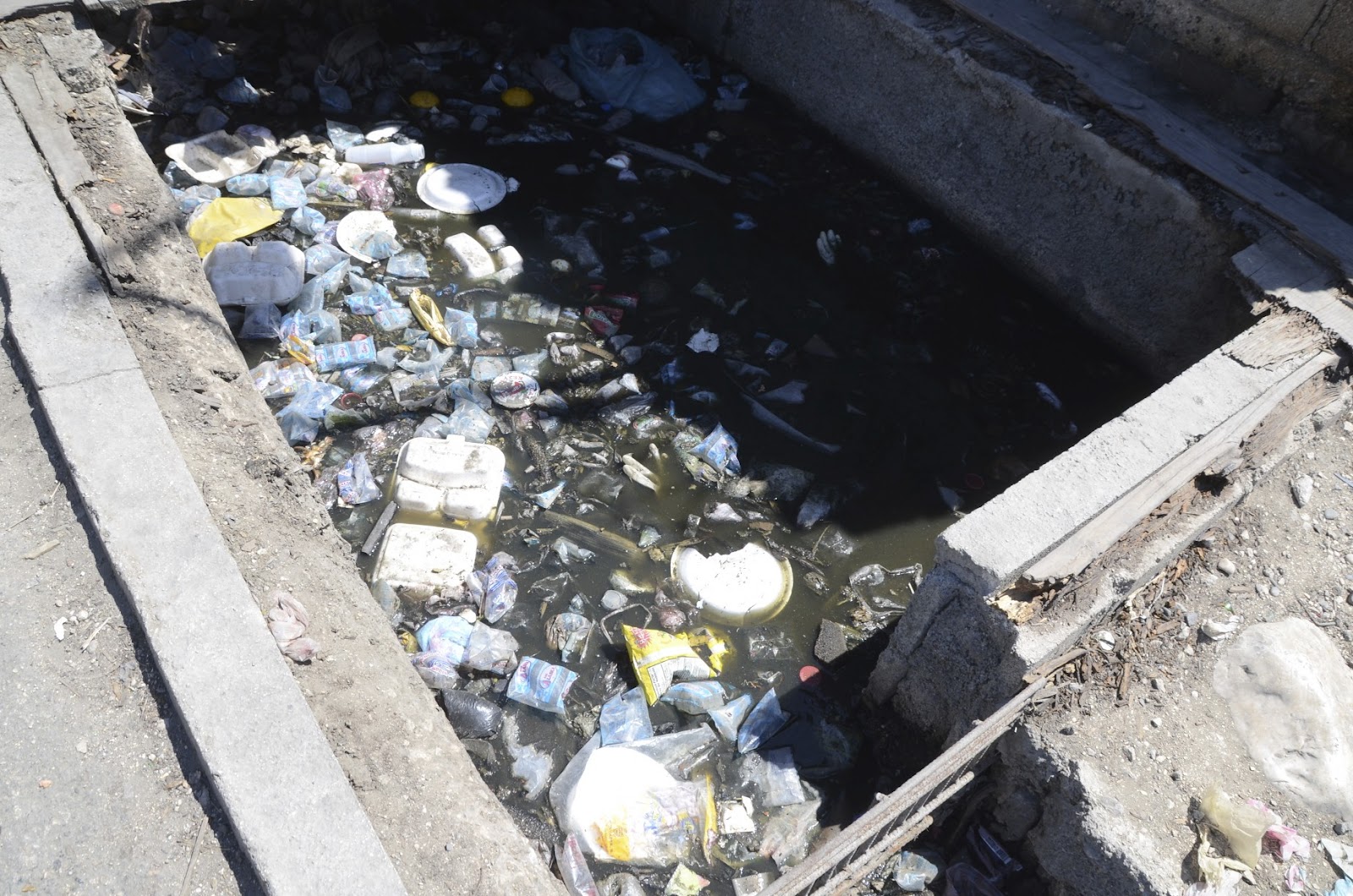
Water Canal in Soleil--Photo by John Carroll, February 25, 2012


John A. Carroll, MD
www.haitianhearts.org

Ministry of Health Disaster in Haiti

Pediatric Cholera--Photo by John Carroll


Early today in pediatric clinic in Cite Soleil I had a young mother bring in her 10 month old baby boy. She told me that he started having diarrhea yesterday. He had ten white watery stools yesterday and five similar stools this morning. He is drinking some and nursing some but clinically appeared lethargic and moderately dehydrated.

It was an easy diagnosis. I thought this baby boy had cholera.

Most of my pediatric patients in the clinic actually do have diarrhea. But this baby's diarrhea was different and his clinical presentation was consistent with cholera.

So what should I do?

The population of Soleil is estimated to be in the hundreds of thousands. But no one knows for sure. And before cholera struck Haiti in 2010, Soleil had the usual horrible diseases of poverty. Now it has had cholera added to its "differential diagnosis" . And the experts from around the world say that cholera will return here in a few weeks when the rainy season starts.

Is this baby the harbinger of the next wave of cholera?

Working in Cite Soleil as a physician is challenging. We all know that the people from the slum are suffering and dying from stupid deaths everyday. This is no secret. And intervening to help them is not always straight forward.

Soleil should not have a monopoly on medical helplessness and hopelessness, but it sure seems to.

I first worked at St. Catherine’s Hospital in Soleil in 1987. I had the opportunity to work with Dr. Paul Blough, a retired OB-GYN doctor from Peoria, Illinois. Dr. Paul delivered over 10,000 babies at St. Catherine’s in the 1980's and 90's. He was in his 70’s and 80’s when he worked in Soleil and he gave excellent obstetric care. And so did the Haitian midwives that worked with him.

The Daughters of Charity, who are an order of St. Vincent de Paul Sisters in Soleil, worked at St. Catherine's during those years too. The hospital functioned and many patients were treated every day.

Doctors Without Borders, which responds to "hot zones" around the world, has been running the hospital since shortly after the 2010 Haitian earthquake. But they left the hospital three months ago because their contract with the Haitian government expired.

Doctors Without Borders had an army of medical people including public health experts that tracked cholera in the Soleil slum neighborhood-by-neighborhood and street-by-street. Cholera tents were erected at St. Catherine's Cholera Treatment Center (CTC). These tents were away from the other post earthquake tents that housed general medical patients. Thousands of cholera patients were treated and many lives were saved.

And inside the hospital that was not damaged by the earthquake, Doctors Without Borders offered a small emergency room, surgery department, internal medicine and pediatric wards, and an obstetric unit.  Many patients from Soleil were operated because the surgeons, anethesiologists, and surgical nurses were on site.


Entrance to St. Catherine's Hospital Cite Soleil

But all has changed. St. Catherine's is no longer bustling with activity like it should be in this huge destitute slum.

Ministre de la Sante Publique et de la Population (MSPP), which is the Haitian Ministry of Health, is in charge of St. Catherine's Hospital now. MSPP has government hospitals in each of Haiti's ten departments. However, they don't function well.

St. Catherine’s is in terrible condition now. It is staffed by a tiny handful of excellent Haitian doctors employed by MSPP, but the hospital has very few medical supplies.

And there is a new problem.

Patients are now charged five Haitian dollars (75 cents US) to have a check up. And if they need to be admitted to St. Catherine's they are charged two hundred Haitian dollars (25 dollars US) for a bed. Doctors Without Borders did not charge.

Patient's families have to provide the sheets for the bed and food for the patient. And family members bathe the patient and empty the bedpan.

Medical supplies and medication are provided by the hospital if they have them. But if they are not available, the patient's family has to try and buy them somewhere on the street which is frequently impossible to accomplish. (How would you buy 4-0 chromic sutures?)

So lack of money stops people from coming to St. Catherine's in Soleil in the first place.

The hospital has very few patients right now. With Soleil's population, there should be patients everywhere. The three stretcher Emergency Room is usually empty of patients and staff. It has one tall narrow cabinet with some medications to treat infectious diseases and hypertensive emergencies.

The General surgery ward at St. Catherine's is competely closed as are the operating rooms. There are no surgeons or anethesiologists.

The Obstetric ward is open and seemed to have the most patients of any inpatient unit. And C-sections can be done under a spinal...but only when a nurse anethetist and an obstetrician is present.


Internal Medicine Ward--St. Catherine's Hospital (Photo by John Carroll)


The Internal Medicine ward has a smattering of a few ill elderly people. There is no oxygen to give patients in respiratory distress and very few medications. It is very depressing to see the elderly lying about sick and in disarray.

The Pediatric ward has a few patients but they should have many more. There are many sick kids in Soleil. St. Catherine's has three Haitian pediatricians employed by MSPP that run an outpatient clinic at St. Catherine's for a few hours Monday-Friday.  And these same three physicians admit the sick babies who they think they can manage in the hospital with its meager supplies and technology.
Pediatric Ward, St. Catherine's Hospital (Photo by John Carroll)

So what does all this mean?

It means that St. Catherine's Hospital, run by MSPP, is offering very inferior care to hundreds of thousands of people from Soleil who become sick or who are injured.

How does this scenario play out on a day by day basis?

Let me give a couple of examples.

A few days ago while rounding in St. Catherine’s Internal Medicine ward, I spotted a sweet appearing old lady lying in a corner bed. Her name is Famia and she is 72 years old.
She had three interested family members seated near her by her bed. Famia was alert and had a very kind appearing grandmother type of face.

I asked her what was wrong. She said that she had been given a shot in her left buttock five days prior and develped a problem.

Famia rolled over and showed me her massively swollen and tender left gluteal area. Her buttock and thigh were red and warm to touch all the way to her mid thigh. There were ominious appearing purple patches of skin over the buttock. She obviously had a very infected buttock and and thigh and needed surgical debridement and antibiotics to have a chance at survival.
Famia's Infected Thigh (Photo by John Carroll)

However, Famia was receiving no IV, no antibiotics or pain meds, and there was no operating room or surgeon waiting to help her. Her leg was septic and she would be too if nothing was done very soon.


I told her that I would pray for her and slowly backed away from her bed not knowing what to do here in Soleil with more neglected slum pathology. Famia had impending death written on her forehead.

I walked to the pediatric ward with Famia on my mind. Prayer is most important, but is that all I could do. What about "works"? There had to be more that we could do here and right now.

And then it dawned on me...why not transfer her? I have a good friend who is a surgeon in private practice in Port-au-Prince, and her number was on my cell phone.

So I called her immediately and she was accepted over the phone right away. I rushed back to her bed, gave her family members the address to the private hospital and surgeon and some money for public transportation and they said they would take her.

Famia made it there and is being treated...I don’t know if she will survive, but her chances at survival in Soleil were zero. And none of this was necessary if St. Catherine's was functioning at a basic level like it should be. ( While posting this, I just received an e mail from the private hospital director stating that one of his surgeons is taking care of Famia and she is doing well.)

And on a bigger picture, what will the people of Soleil do when the rainy season starts and cholera starts infecting them again?

St. Catherine's is going to triage people with cholera AWAY from St. Catherine’s to CTC’s because they have no intention of treating cholera like Doctors Without Borders did during the last two years. Patients will be sent to the small CHAPI health center near the entrance of Soleil or to some other CTC somewhere in PAP run by NGO's. (Hopefully, Samaritan's Purse will reopen their 200 bed CTC in Soleil if necessary.)


And what about my baby in the clinic with cholera yesterday? The baby was still alert enough to take fluids by mouth, but with the weekend approaching, I told the mother that she needed to take her baby to a CTC in the neighborhood of Delmas so the baby could have an IV.

Mother listened but she politely refused.

She knew St. Catherine's is right across the street and could not understand why she could not take her baby there.  And she said she would get lost in the Delmas neighborhood and would not be able to find the CTC.

So I reluctantly gave here some packets of oral rehydration salt and some money for transportation to Delmas if she changed her mind.

It would be easy to blame this mother. But we can't especially under the inhumane living conditions in Soleil. There is no structure here except hob-nob attempts at daily survival.

And guess what? Many more mothers in Soleil think the same way that this mother thinks. They have no money for transportation out of the slum and they have more kids at home to worry about.  So they have to do their own triage and decide which of their kids go to school, which kids eat, and which ones get medical care. They have to pick which children will live and die.

I recently talked to an official for MSPP in downtown PAP. I specifically asked the official why things are so atrocious in MSPP run hospitals. The official said that there is not enough funds dedicated to MSPP for anywhere in Haiti, let alone Cite Soleil. The official said there is not the “governmental will” to allow MSPP hospitals to function at a higher level.

This leads us back to money again. Where is all the post earthquake billions of dollars of pledged money for Haiti?

I can sure tell you where it isn't. It is not at St. Catherine's Hospital in Cite Soleil.

Neonatal Intensive Care Unit--St. Catherine's Hospital, Cite Soleil (Photo by John Carroll)


John A. Carroll, MD
www.haitianhearts.org


Violence in Soleil--March 5, 2012 (Updated)

While entering Soleil yesterday morning (Monday, March 4, 2012) my driver Jean Claude and I  noticed hundreds if not thousands of young people walking in the streets. This seemed unusual and looked like a demonstration was just ending.

Jean Claude grew up in Soleil and always has his ear to the ground.  I asked him what was going on. He said he had no idea and pulled over on the main road.

Jean Claude stuck his head out the window and asked people walking by what was happening. We were told that there was a shooting of a man in Bois Neuf that morning. Bois Neuf is a section of Soleil just a few blocks away. The victim was taken to a hospital and was in critical condition. And the victim just happened to be a school director for a group of very popular schools in Soleil that provide education and hot meals for over 6,000 children every day.

The people from the slum were enraged with the shooting of this man and attempted to set shacks on fire in Bois Neuf where they thought the shooters could be. MINUSTAH stepped in at that point and stopped the place from going up in flames.

None of this sounded good.

Love--March 6, 2012--Photo by John Carroll
So we proceeded to the pediatric clinic in the back of Soleil and hundreds of patients were waiting like usual on a Monday morning.

The pathology in the clinic was the same. One of my little patients was a 10 month old baby girl named Love. She was brought to the clinic by a lady that is not her mother because her mother is "crazy" according to the caregiver.

Love had been sick for 15 days with fever, vomiting, and diarrhea. She lives in a tent.

The baby did appear quite ill--dehydrated, hot, and lethargic. Love needed to be admitted to St. Catherine's Hospital in Soleil which is only about 50 yards from our pediatric clinic.

However, because of the shooting of the school director earlier in the morning, St. Catherine's had sent home their entire staff of doctors and nurses and advised other doctors on their way not to come into the slum. So the patients in the hospital were on their own and I could not send Love to St. Catherine's for an IV and antibiotics.

So I told the caregiver that she needed to leave Soleil now and go to St. Damian's Hospital in Tabarre right away. And if she did not do this Love would probably die. The caregiver was excellent and agreed to leave right then for the Tabarre hospital.

The slum has so many problems with violence being one of them. Violence and fear closes things down and people like Love can die easier from stupid deaths.

(I will verify what is posted above and update with any additions or corrections as soon as possible.)
--------

Update:

Tuesday Night, March 6, 2012

I heard from very reliable sources that it was Jean Nelson who was shot and killed. Mr. Nelson was Fr. Tom Hagan's right hand man in Soleil and director of Hands Together Schools in Cite Soleil.
Another teacher was killed at the same time and Mr. Nelson's brother was shot but was not killed. I do not know the extent of his injuries.

Hands Together has over 6,000 children in their schools and feeding programs in Cite Soleil.

Apparently 15 men were involved in the shooting in Bois Neuf early yesterday morning.

Mr. Nelson was also director of Boukman Radio Station in Cite Soleil. He had lost both his wife and child during the 2010 earthquake.

The pediatric clinic today was only one quarter full by my count. Three of our doctors did not come to work today because of the violence in Soleil. Another man was shot in Bois Neuf today...I don't know his outcome.

St. Catherine's Hospital, right across the field from our pediatric clinic was essentially devoid of medical staff again today.

We know who died form the terrible shooting yesterday but we don't know the many others who MAY have died because they could not venture out into the streets to get to the clinic or to St. Catherine's Hospital today.

A manifestation is planned for Soleil in the morning in honor of Mr. Nelson.


Saturday, February 25, 2012

Cite Soleil

Photo by John Carroll--February 25, 2012

These men in Soleil were working like this to make a few cents today while the Haitian Prime Minister was resigning a few miles away.

Que lastima!!

Tuesday, February 21, 2012

Deconstruction of a Haitian Heart


Beth


Teledjol is a Haitian word which means gossip or rumor mill. It is the way news is spread in Haiti. Facebook is here too but teledjol is still king.

When Haitian Hearts comes to Haiti it doesn’t take long before we are seeing patients with heart problems.

The other day a polite 16 year old girl showed up with a “heart problem”. I will call her Beth.

Beth came with her mother who does laundry at a hotel in Port-au-Prince. Mother makes 5 dollars per day and she commutes a long ways via public transportation.

Beth lives in downtown Port-au-Prince with her mother and siblings in a place called Carrefour Feuilles.

Beth told me that in October, 2011 she became short of breath and started coughing up blood. She was hospitalized in LaPlaine for ten days and got better. Her doctor told her she had a heart problem and started her on a strong diuretic (furosemide).

However, Beth told me that she is still short of breath with exertion. She takes her furosemide daily, but she does not know the dose and only had a couple of pills left in a crumpled tiny baggy.

At the appointment with me Beth did bring her chest x-ray and an echocardiogram. Both had been done last fall when she was sick.

I like to talk with patients and examine them before I look at their test results. I want to make my diagnosis with just the history and physical and quantitate a pre-test probability of disease BEFORE I look at test results. Test results can lead physicians astray because tests frequently "lie" and test results need to be combined with the patients exam to arrive at a proper diagnosis.

Beth appeared calm and not short of breath. Her oxygen level (pulse oximeter) was 98%. Her skin was warm and dry.

However, Beth’s blood pressure was bothersome. It was 132/50 in her right arm. That sounds good, but there is too much of a gap between the top (systolic) and bottom (diastolic) number. And in Haiti that frequently means that her aortic valve is not competent. In other words, her aortic valve may be leaking which allows blood to flow in the reverse fashion when the heart is resting between beats. This allows too much blood to flood her main pumping chamber (left ventricle) with blood which can hurt the chamber over time because of volume overload.

Her neck did not reveal any distended neck veins. This was good because it means that the venous return of blood was entering the heart unobstructed-- not blocked from a totally failing heart.

Beth’s heart exam revealed a heart that was slightly enlarged. And sure enough, listening along the left border of her sternum revealed a high-pitched decrescendo murmur during diastole..which meant that her aortic valve is leaking.

Inching the stethoscope out to the apex of her heart below her left breast revealed another murmur. It was loud, medium pitched, and radiated to her left armpit. This told me that her mitral valve was also leaking.

In Haiti these findings mean that Beth most likely had at least two bad heart valves from rheumatic fever that she unknowingly acquired as a child.  (Rheumatic fever is caused by strep throat that is never treated with penicillin. The body’s immune system attacks the strep bacteria and can attack the heart valves at the same time.)

So I peeked at her chest x-ray. It showed a slightly enlarged heart (not too bad) and a big left atrium (not too good). This meant that her mitral valve was indeed leaky and maybe tight (stenotic) too. The good news about her chest x-ray was that her lung fields are clear...no fluid in the lungs.

Her echocardiogram, which cost her mother $80 US here in Port-au-Prince,  showed both her aortic valve and mitral valves to be diseased and leaky, but the function of her heart muscle is good. The left ventricle is beating well because the heart muscle has not been damaged to the point where it is stretched so much that it can't contract efficiently.

So what now?

Beth needs heart surgery. And she needs it sooner rather than later. She does not have the cardiac cachexia brought about by a severely weak heart...yet. She can still withstand the organized assault of heart surgery.

Haiti is in shambles. Her heart surgery cannot be safely done here.

So I told Beth and her mother to start working on obtaining her Haitian passport and Haitian Hearts would start looking for a medical center to accept her.

I also started her on other medications to help her heart beat stronger, diurese more fluid, penicillin to prevent further rheumatic fever, and an aspirin to keep her blood thin so she does not form a blood clot in her distended left atrium and have a stroke.

And all of this was caused because she lacked basic health care. No treatment for a sore throat when she was a kid.

John A. Carroll, MD
www.haitianhearts.org
Monday, February 20, 2012

Saturday, February 18, 2012

Karnival in Soleil

Photo by John Carroll--February 18, 2012

Why We Bring Haitians to the States for Heart Surgery

Photo by John Carroll--February 18, 2012
This is the Internal Medicine Department at St. Catherine Laboure Hospital in Cite Soleil. Doctors Without Borders quit staffing the hospital in December, 2011. MSPP (Ministry of Public Health) in Haiti is now in charge.

Including this dying lady, there are four adult patients in the tiny internal medicine unit. St. Catherine's is the only hospital for hundreds of thousands of people in Soleil.

Monday, February 13, 2012

Patient "154" Arrives in USA Today for Heart Surgery

Haitian Hearts patient number 154 arrives today for heart surgery.

Many thanks to his family in Port-au-Prince for never giving up on him and to Miss Ginny and Miss Amy for supporting him through some tough times.

More later.

Thursday, February 09, 2012

Impunity in Port-au-Prince


February 8, 2012
(Photo by John Carroll)

Impunity in Port-au-Prince
By AMY WILENTZ

Port-au-Prince, Haiti

IT has been painful to watch as Jean-Claude Duvalier, who inherited the brutal dictatorship that once ruled Haiti, swanks around the hot spots of Port-au-Prince, flanked by the dregs of his regime — including former members of the dreaded secret police, the Tontons Macoute — as if he were just another member of the capital’s thoughtless, partying elite.

Since his return in 2011 from a 25-year exile, Mr. Duvalier — Baby Doc — has managed to insert himself into semi-polite society, even finagling a seat near the new president, Michel Martelly, at the memorial ceremony for the victims of the 2010 earthquake. The president has filled many positions in his government with former Duvalier officials and their relatives. In short, he is rehabilitating Mr. Duvalier — and along with him, the extrajudicial code he and his father, François Duvalier, governed by. Last month, Mr. Martelly proposed a blanket pardon of Baby Doc — who has been accused of corruption and human rights abuses — telling The Associated Press, “I do believe that we need that reconciliation in Haiti.”

A day later, after a cry of indignation from Haitian and international groups, he claimed he had been misunderstood. But it turned out his pardon wasn’t even necessary. On Jan. 30, the investigating judge on the case recommended that all human rights charges against Mr. Duvalier be dropped and that he be tried instead in a lesser court on charges of financial malfeasance. Amnesty International called the investigation “a sham.”

It is the continuation of Haiti’s tradition of impunity (the veiled meaning of “reconciliation”) that has led directly to the convulsed, inconclusive and violent gyrations the country has made in its attempt to move toward democracy since the overthrow of Baby Doc. Haiti will not achieve real democracy if its justice system remains unwilling to condemn the crimes of the past, punish the perpetrators and make it clear that such abuses will not be tolerated in the future.

In nearly 30 years of power, the Duvalier regimes offered impunity for their operatives. The army and the Tontons Macoute committed gross violations of human rights, including arbitrary arrest, prolonged incarceration without trial, starvation and torture of political prisoners and the persecution and killings of their associates and families.

The violence persisted after Baby Doc fell. While he and his family fled to France aboard a United States cargo plane, crowds wielding rocks and machetes destroyed the homes of known Duvalierists and hunted down and killed dozens of Tontons Macoute.

They did this, a Haitian friend once explained to me, because they knew the courts could not or would not bring the Tontons Macoute to justice. These killings were mostly revenge murders — score settling — and no one in the crowds was jailed or prosecuted for them.

While the country was ostensibly laying the groundwork for democracy, known perpetrators of human rights abuses were only occasionally arrested. Most were promptly released; many escaped. Few have been brought to trial, and even fewer convicted.

In 1987, elections were aborted when a mob of former Tontons Macoute descended on a polling place and slaughtered 34 voters. More were killed in other polling places. It took nine years for Claude Raymond, the former head of Baby Doc’s army and the suspected mastermind of those attacks — if one can use such a term — to be arrested. (In that time, he even presented himself as a candidate for president, though he was excluded from participating in the elections.) He was never tried and died in prison in 2000.

In 1991, Haiti’s first fairly elected president, Jean-Bertrand Aristide, was ousted from office, and in 1994, at least 23 of his supporters were killed by paramilitary forces in Raboteau, a shantytown on the western coast. In 2000, after Mr. Aristide returned to power, 16 of the perpetrators were arrested and found guilty. But after he was overthrown and exiled for a second time, Haiti’s supreme court overturned 15 of those convictions. Only one person connected to the attacks has been incarcerated; he was tried and convicted — of mortgage fraud — in New York. Another person tried in absentia had his Florida lottery winnings garnished and distributed to victims of the massacre.

Today, besides a few bright points — like the conviction last month of eight police officers for killing prisoners after the earthquake — impunity remains the country’s fallback position. It has made a functioning justice system, and therefore democracy, impossible.

That’s why Mr. Duvalier must be prosecuted for his crimes against humanity. If they are dismissed, it will send a cheering message to past and future perpetrators of similar abuses. If he is tried and convicted, those who have relied upon impunity will know that they, too, risk a turn in the dock.

The Haitian people want justice, and the international community must support them. Two days ago, on the 26th anniversary of the overthrow of Baby Doc, a small but vocal crowd of his regime’s victims protested in front of the Palais de Justice. They painted the words “Aba impinite” — down with impunity — in blue spray paint on the court’s white wall.

Amy Wilentz is the author of “The Rainy Season: Haiti Since Duvalier.”